When most people think of towing, they often picture a standard car being loaded onto a flatbed or pulled by a tow truck. However, towing services go far beyond assisting everyday drivers. One of the most complex and demanding areas of the industry is heavy-duty towing, which involves moving large vehicles such as buses, semi-trucks, and other commercial vehicles. These massive machines require specialized equipment, trained operators, and careful planning to ensure safe and efficient recovery. Understanding how towing companies handle buses and large trucks highlights the importance of professional expertise in keeping roads safe and commerce moving.
The Unique Challenges of Towing Large Vehicles
Unlike passenger cars, buses and trucks are built with size and weight that far exceed ordinary towing capabilities. A city bus or fully loaded semi-truck can weigh anywhere from 15 to 40 tons, which means traditional tow trucks are simply not equipped to handle them. These vehicles also have longer wheelbases, wider frames, and higher centers of gravity, all of which make them more challenging to lift and stabilize.
Additionally, large trucks often break down in inconvenient or hazardous locations, such as on highways, busy intersections, or narrow rural roads. Removing them quickly and safely requires a high level of coordination and technical knowledge. Any mistakes in the towing process can lead to further damage to the vehicle, create dangerous conditions for other drivers, or even cause accidents during recovery. Because of these challenges, only towing services with heavy-duty equipment and specialized training can manage such tasks effectively.
Specialized Equipment for Heavy-Duty Towing
Towing companies that handle buses and large trucks invest in specialized machinery designed to move oversized vehicles. One of the most important pieces of equipment is the heavy-duty wrecker, a tow truck built with reinforced frames, powerful engines, and advanced winching systems. These wreckers are capable of handling extreme weights and are often equipped with rotating booms that provide flexibility in tight spaces.
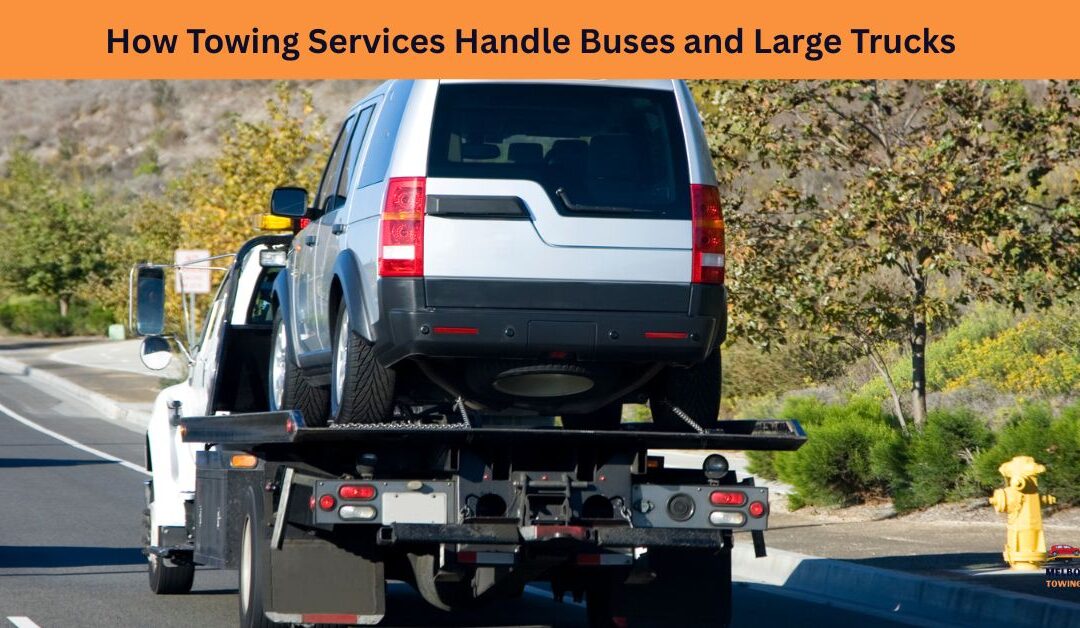
Flatbed trailers are another common solution, particularly for transporting disabled trucks or buses over long distances. These trailers allow the entire vehicle to be lifted off the ground, reducing the risk of tire or axle damage during transit. For vehicles that cannot be driven or rolled onto a trailer, hydraulic lifts, air cushions, and heavy-duty dollies are often used to assist in the loading process.
Each tool and piece of equipment serves a specific purpose, and operators must be trained to know when and how to use them. For example, improperly using chains instead of soft straps could damage a bus’s suspension system, while failing to balance a semi-truck correctly on a flatbed could create dangerous shifting during transport.
The Process of Recovering a Large Vehicle
The recovery of a bus or large truck begins with a thorough assessment of the situation. Tow operators evaluate the location, condition, and size of the vehicle to determine the safest approach. If the vehicle is on its side or jackknifed, specialized recovery techniques such as winching or upright lifting may be required. In some cases, air cushion recovery is used, where large inflatable cushions are placed under the overturned vehicle and gradually inflated to bring it back to an upright position without causing further damage.
Once the vehicle is stabilized, operators secure it using heavy-duty straps and rigging before lifting or pulling it onto the transport equipment. During this process, weight distribution and stability are carefully monitored to prevent tipping or shifting. When transporting the vehicle, operators must follow strict road safety protocols, including using escorts or additional signage if the vehicle is oversized.
The process requires precision, patience, and experience. Unlike standard car towing, there is little room for error when dealing with such large and heavy vehicles. Every step, from stabilization to final delivery, is carefully managed to ensure the safety of both the towed vehicle and other road users.
Training and Expertise of Heavy-Duty Tow Operators
Handling large vehicles is not just about having the right equipment—it also demands highly trained professionals. Tow truck operators working in heavy-duty recovery undergo specialized training to learn the physics of weight distribution, the mechanics of large vehicles, and the safe use of advanced equipment. They are also trained in emergency response procedures, as accidents involving trucks and buses often require quick action to clear roadways and prevent further hazards.
In addition to technical knowledge, operators need strong problem-solving skills. Each towing situation is unique, and unexpected challenges such as bad weather, difficult terrain, or mechanical issues with the disabled vehicle may arise. An experienced operator knows how to adapt quickly while keeping safety as the top priority.
The expertise of these operators is crucial not only for preventing damage to the vehicles but also for maintaining the flow of traffic and minimizing delays. Without skilled professionals, the process of removing a large truck or bus could take much longer, increasing risks and inconveniences for everyone on the road.
The Importance of Heavy-Duty Towing in Public Safety and Commerce
Buses and large trucks are vital to modern life, transporting people, goods, and essential supplies across cities and countries. When one of these vehicles breaks down or is involved in an accident, it can cause major disruptions. A disabled bus may leave passengers stranded, while a jackknifed semi-truck can block an entire highway, delaying deliveries and creating safety hazards.
Heavy-duty towing services play an essential role in resolving these situations. By quickly and efficiently removing large vehicles from the road, they restore traffic flow, reduce the risk of secondary accidents, and ensure that essential goods and services continue to move. In this way, towing companies contribute not only to road safety but also to the economy.
For businesses that rely on trucking fleets, having access to reliable heavy-duty towing services provides peace of mind. Knowing that help is available in the event of a breakdown or accident means less downtime, fewer financial losses, and greater overall reliability. For communities, it means safer roads and reduced disruptions to daily life.
Conclusion
Towing buses and large trucks is a complex and demanding task that requires specialized equipment, highly trained operators, and careful planning. From the sheer weight and size of these vehicles to the challenges of recovering them from difficult locations, heavy-duty towing is a vital service that keeps roads safe and commerce running smoothly. Flatbeds, heavy-duty wreckers, rotating booms, and air cushion recovery systems are just some of the tools used to handle these massive machines. Behind every successful recovery is a skilled team of professionals who understand the risks and know how to manage them.
By investing in the right equipment and training, towing companies ensure that even the largest vehicles can be moved safely and efficiently. For businesses, passengers, and everyday drivers, these services provide reassurance that no matter how big the problem, there is always a solution.
Melbourne Towing Guys
12 Esperance Rd
Mount Waverley VIC 3149
(03) 7037 7636
Recent Comments